Lotus Elise Reborn as Central-Seat Supercar Slayer That Weighs Less Than a Miata
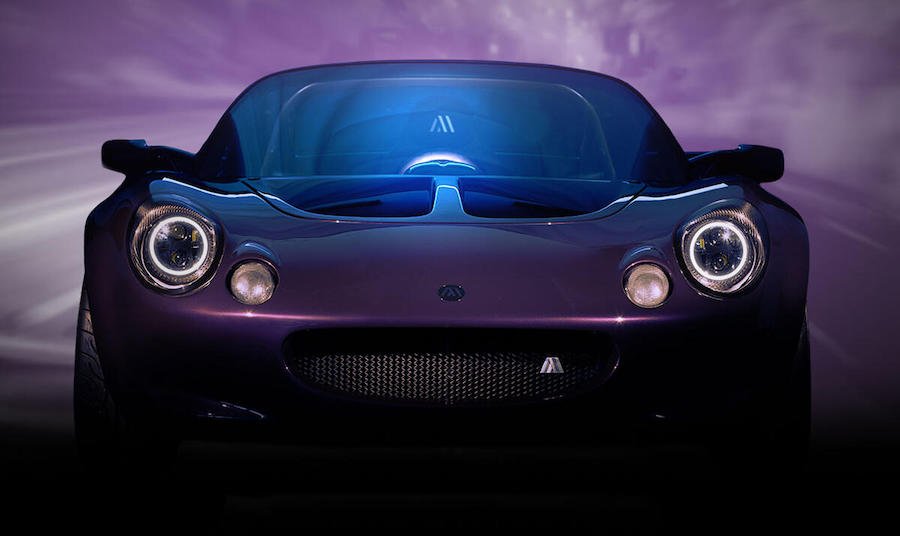
Back to Basics for the Future
The automotive world has spent thirty years trying to improve on the original 1996 Lotus Elise formula, adding power steering, air conditioning, and creature comforts that missed the point entirely. The Series 1 Elise weighed under 1,600 lbs and proved that lightweight engineering could deliver more thrills than any amount of horsepower. Now Analogue Automotive has taken that philosophy and made it even more exciting with its latest project, the VHPK.
The VHPK strips away all compromise by adopting a central driving position, borrowed directly from the single-seat Elise race cars from the early 2000s Autobytel championship. Those racing machines revealed that when you center the driver, you don’t just save weight, you create perfect balance and an almost telepathic connection between car and driver. It’s the same thinking that drives Gordon Murray’s GMA T.50. The difference is that the VHPK at $475,000 costs a mere fraction of the price of either.
British Heart, British Soul
Under the VHPK’s sculpted carbon fiber skin sits the Elise’s Rover K-series 1.8-liter engine bored out to 1.9-liters and pushing over 250 horsepower into a package that tips the scales at 1,322 lbs. That’s a power-to-weight ratio that would humble most supercars, achieved through obsessive weight reduction rather than horsepower inflation, just as Lotus founder Colin Chapman intended.
The monocoque carbon fiber chassis forms the structural backbone. The central driving position places you directly over the rear axle for perfect weight distribution. Analogue Automotive has even engineered bespoke suspension components to maintain the Elise’s legendary handling characteristics. The result is a car that delivers track-focused dynamics with road legality. It’s a package that makes even the best-engineered sports cars look unnecessarily complex.
The Elise Reborn
Where modern sports cars have grown fat and complicated, the VHPK has grown lean and focused. It’s not trying to be a grand tourer or a daily driver. It’s trying to be the perfect expression of what made that original Elise so special, which is the pure, undiluted joy of driving a properly engineered lightweight sports car. Thirty years later, we can definitely say it’s mission accomplished for Analogue Automotive.
Analogue Automotive isn’t mass-producing these, with production limited to just 35 units. Which means the VHPK remains genuinely rare. It isn’t artificial scarcity for marketing purposes, it’s the natural result of building cars the old-fashioned way, where every detail matters. The VHPK stands as proof that true exclusivity comes from doing something properly rather than simply doing it expensively.
Related News
