Mercedes Boss Urges Europe to Drop the Gas Engine Ban
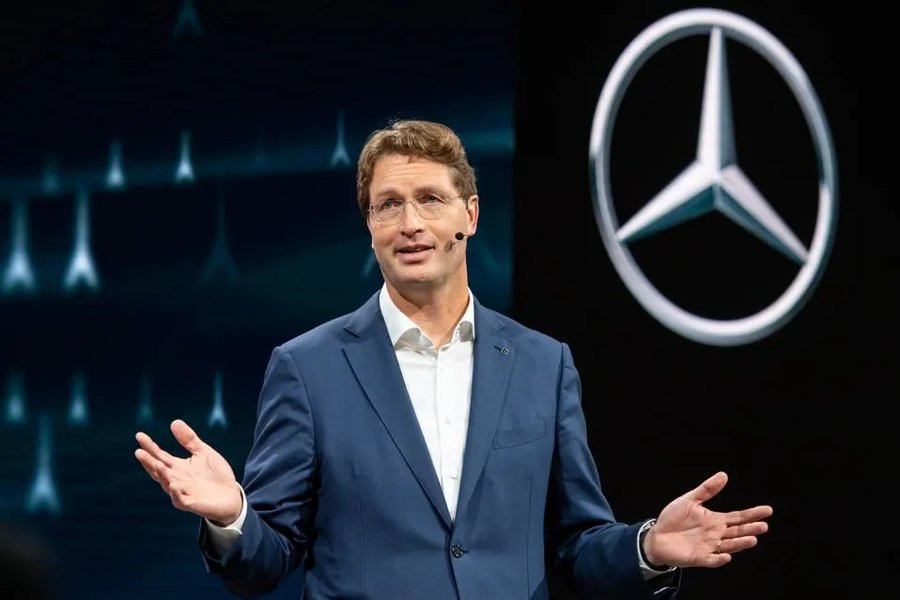
It’s only been a few weeks since the Mercedes CEO was brutally honest about his prediction for where Europe’s car industry is headed. Speaking with German business newspaper Handelsblatt, Ola Källenius said the EU needs a “reality check” to avoid “heading at full speed against a wall” and even "collapse." He was referring to the upcoming sales ban on new cars with combustion engines, set to take effect in 2035.
Now, wearing his other hat as President of the European Automobile Manufacturers' Association (ACEA), the Mercedes chief is urging the President of the European Commission to take action against the controversial ban. In an open letter to Ursula von der Leyen, Källenius argued the “world has changed drastically” since the ban was first announced a few years ago.
The Swedish executive believes it’s a “narrow assumption” to think decarbonization relies solely on outlawing new gasoline cars from the middle of the next decade. In the same letter, also signed by Matthias Zink, President of the European Association of Automotive Suppliers (CLEPA), Källenius criticized the ban’s “rigid car and van CO2 targets.” He insists that reaching 0 g/km in just nine years is “simply no longer feasible.”
Still, he sees a window of opportunity. Källenius claims the EU has a “last chance” to adjust course as early as next month. The issue will be debated on September 12 during a Strategic Dialogue, where the ban could be reviewed and potentially delayed. Automakers within ACEA remain committed to achieving carbon neutrality by 2050, but argue that eliminating combustion engines by 2035 would be premature.
Not everyone agrees. Kia, for instance, takes the opposite stance. Its European boss, Marc Hedrich, told Automotive News that dropping the ban “would cost us a fortune.” He explained that Kia has “an avalanche of electric cars coming,” and slowing down EV launches to keep gasoline models alive would hurt profitability. While Kia isn’t part of ACEA, its parent company, Hyundai, is one of the association’s 16 members.
The EU reaffirmed the 2035 ban earlier this year but offered automakers some breathing room. CO2 targets that took effect in 2025 no longer have to be met strictly by the end of this year. Instead, manufacturers can average emissions over the 2025-2027 period, rather than hitting annual limits. Even so, the new targets for the 2025-2029 period are 15 percent lower than those for 2021-2024, meaning fleets must average 93.6 g/km.
Related News
